A front garden works harder than any other part of the plot. It faces the street, takes the worst of the wind, and usually inherits whatever soil the builder left behind. It also has to look presentable all year, which is a tall order when you would rather be round the back with a mug of tea.
The answer is not block paving and a pair of clipped conifers. It is a border of Scottish natives: plants that have spent millennia getting used to our wind, salt, wet winters and thin soils, and that feed bees, birds and butterflies while asking almost nothing in return.
Why natives earn their place at the front
Native plants are not fussy in the way garden cultivars can be. They leaf up when the weather suits them, flower without a feed, and cope with the sort of neglect that would finish off a bedding display by June. Once established, most need no watering beyond what the sky provides.
There is a wildlife argument too, and it is a practical one. Our insects and birds evolved alongside these species. A rowan carries berries that redwings and fieldfares will strip in a hard winter; a thistle head left standing gives goldfinches something to pick at in January; heather in late summer is one of the richest sources of nectar in these islands.
One caution: "native" should mean native to Scotland, not simply "wildflower". Cheap mixes can contain species from the Mediterranean or, worse, plants that spread aggressively. Buy from a nursery that names the species, and ask about provenance where you can.
Read the site before you dig
Ten minutes with a spade and a handful of soil will save you a season of disappointment. Work through these points before ordering anything.
- Soil acidity. Heathers need acid, free-draining ground. If your soil is neutral or limey, leave them out and use sea thrift, wild thyme, kidney vetch and viper's-bugloss instead.
- Drainage. Waterlogged clay suits cross-leaved heath, meadowsweet and devil's-bit scabious. Sharp, gravelly ground suits bearberry, tormentil and thrift.
- Light. Most of these plants want sun. A north-facing front will still support foxgloves, wood cranesbill and bluebells, but flowering will be thinner and later.
- Wind and salt. Coastal gardens need low, mounding plants with tough leaves. Avoid anything tall and soft, which will be flattened by the first gale.
- Space. In a narrow border, keep to low ground cover and one small tree. A rowan works well as a single-stemmed tree or in a large pot by the gate.
Three plants to build the border around
Heather
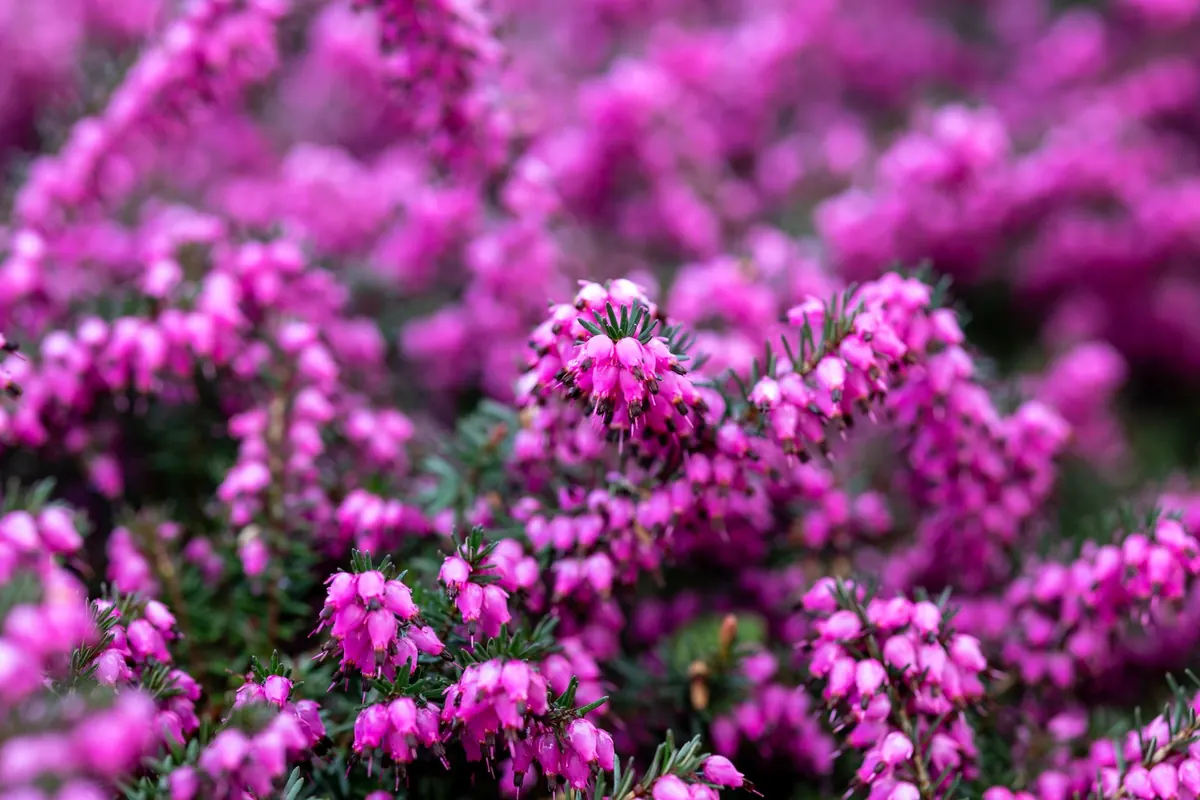
Calluna vulgaris is the backbone of a Scottish native border: low, evergreen, tolerant of poor acid soil, and covered in pink or purple flower from midsummer into autumn. Plant it in groups rather than odd singles, spaced about 30cm apart, and let it knit into a carpet that smothers weeds for you. In spring, trim the previous year's flower spikes with shears, but never cut back into the bare, woody base — heather rarely regrows from old wood.
Thistle, handled sensibly
Spear thistle is the genuine native and a wonderful plant for bees and finches, but it is spiny, it self-seeds, and it is not what you want beside a path where children walk. Plant it in a wilder corner, or choose melancholy thistle, which has softer foliage and a gentler habit. Either way, wear gloves, and cut the seed heads off before they scatter if you do not want a colony.
Rowan
Few small trees earn their space as well as rowan. It tolerates wind, poor soil and even quite exposed sites, gives creamy spring blossom for pollinators, then berries and fiery autumn colour. Give it room to reach its natural shape rather than clipping it into a lollipop, and leave the berries for the birds.
A workable plan for a small front border
- Strip the existing lawn or gravel, and dig out perennial weeds properly. This is the one job worth doing thoroughly.
- Improve drainage with grit if the ground is heavy, but add no rich compost or fertiliser — fertile soil makes wildflowers leggy and short-lived.
- Spread a 5cm layer of gravel or bark mulch after planting. It holds moisture in and keeps weed seedlings down.
- Plant in autumn or early spring, when the soil is warm enough to root but not baking.
- Water through the first summer only, then leave the plants to fend for themselves.
Keeping it genuinely low-maintenance
The trick is to do the right jobs at the right time rather than to do nothing. Leave seed heads and stems standing over winter — they feed birds, shelter insects and look far better in frost than bare earth. Then cut herbaceous growth back in late February or early March, before new shoots appear.
Trim heathers after flowering. Pull the odd weed while the ground is soft rather than waiting for a weekend blitz. That is roughly an hour in spring and an hour in autumn, plus a few minutes here and there.
Two safety notes worth remembering: foxgloves are toxic if eaten, so keep them away from children and pets that chew, and wear gloves and eye protection when working among thistles. If you are planning substantial hard landscaping at the front, check with your local authority about what is permitted before you start.
Making room for wildlife
Small additions make a real difference. A shallow dish of water at ground level gives bees and birds somewhere to drink. Leave a patch of bare soil for mining bees. If you plant bluebells, insist on native Hyacinthoides non-scripta rather than Spanish bluebell, which hybridises with our native stock. And resist tidying every seed head away: a border that looks slightly untidy in November is doing its job.
Start with a quarter of the border
You do not need to dig up the whole front garden in one go. Clear a manageable patch this autumn, plant a group of heathers with a rowan at one end and a few thistles at the other, and see how it settles. Once you have watched it come through a Scottish winter without complaint, you will know exactly where to extend it next year — and you will have a front garden that looks after itself.
Photo: Joerg Mangelsen / Pexels