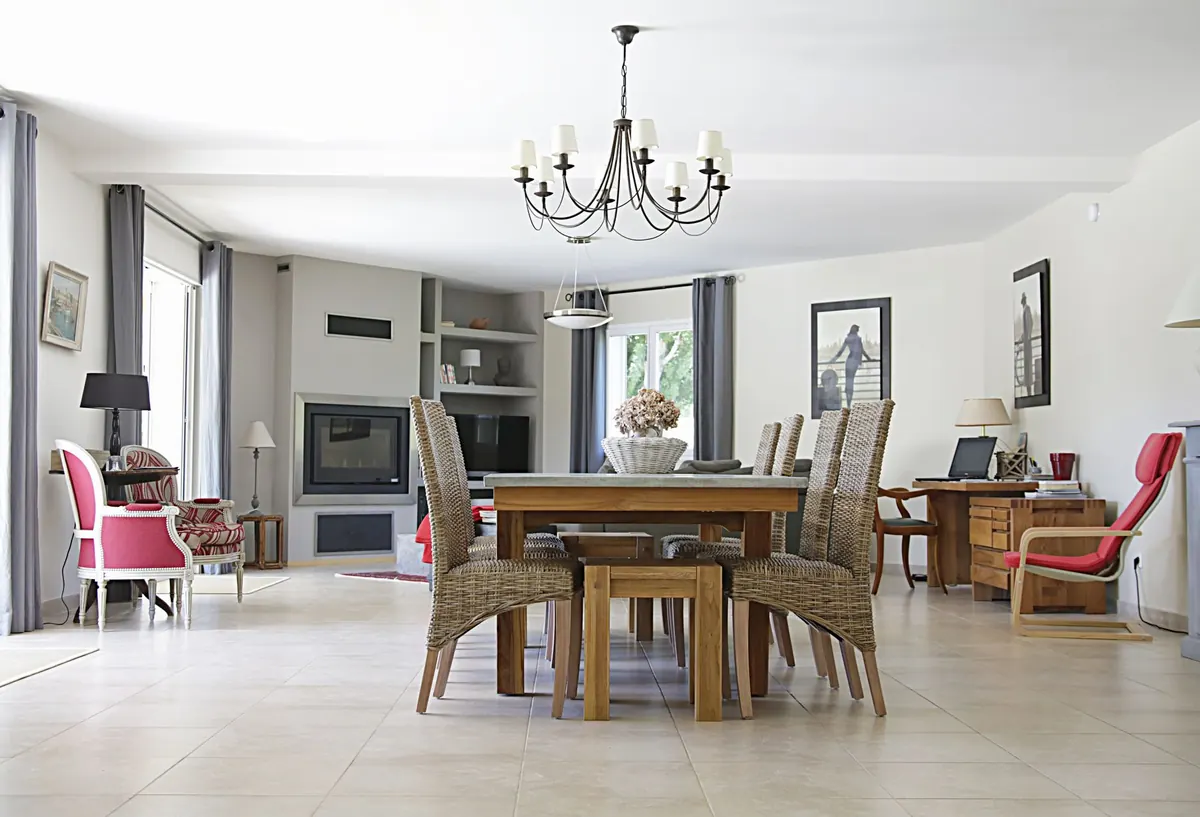
Renting does not have to mean magnolia walls, a bare ceiling rose and someone else's beige carpet. A cosy room is mostly made of light, texture and the small things you touch every day, and none of those need a drill. Everything below comes down in an afternoon, and most of it comes with you when you leave.
Start with the walls: removable wallpaper and fabric
Peel-and-stick wallpaper is the quickest way to add pattern or colour to a plain wall. The sheets carry a low-tack adhesive, so they grip smooth, sealed surfaces well — painted plasterboard, MDF, melamine, sealed plaster — and struggle on dusty, bare or freshly painted walls. If the room was decorated recently, give the paint a few weeks to cure first.
Always test before you commit. Cut a 30cm square, press it into a corner behind the sofa, and leave it for a week. Peel it back slowly, flat against the wall. If it lifts paint or leaves a mark, you have found out in a hidden spot.
To hang it, wash the wall with sugar soap and let it dry completely. Start at the top and peel the backing away in 30cm sections, smoothing with a felt-edged squeegee from the middle outwards to push air towards the edges. Keep the paper clear of sockets and switches. If you want a neat finish around a faceplate, ask a qualified electrician to remove and refit it rather than working around a live circuit.
One wall is usually plenty. A panel behind the bed or a strip above a desk gives you the pattern without the commitment, and it uses far less paper. A large fabric panel hung with adhesive strips does a similar job and costs less.
If you prefer fabric, try the liquid starch method. Mix cornflour or a commercial liquid starch with water, paint it onto the wall with a roller, and press your fabric into it while it is still wet. Smooth out bubbles with your hands or a squeegee, then let it dry overnight. The starch holds the fabric in place and peels away cleanly when you are ready to move out. It works best on smooth, painted walls and lightweight cottons or linens. For a quicker fix, hang a length of fabric from a curtain rod or a row of adhesive clips to create a soft headboard or a wall hanging.
Let tension rods do the work
A spring-loaded tension rod holds itself between two flat surfaces by pressure, so it works inside a window recess, between two alcoves, inside a wardrobe or under a shelf. Measure the narrowest point of the gap and buy a rod that extends past it, then extend it until it presses firmly. You want pressure, not force.
Weight is the limit. Voile, cotton and lightweight linen panels are fine. Heavy lined or blackout curtains usually are not; for those, use a lightweight blackout panel or an adhesive-strip blind. Rods can also slip when the heating comes on and timber or plaster moves, so check them once a month and give them a twist to re-tension.
- A voile panel for privacy on a street-facing window.
- A rail across a recess to hang scarves, bags or a fabric room divider.
- An extra hanging rail inside a wardrobe.
- A rail under a kitchen shelf for mugs and small utensils.
For a softer look, thread a few lightweight curtains onto a tension rod and use it to divide a studio flat into a sleeping area and a living area. Choose a rod with rubber or silicone ends to protect paintwork and improve grip. Avoid placing tension rods on textured or wallpapered surfaces, as they can slip or leave dents.
Plug-in lighting beats a ceiling rose
A single bulb in the middle of the ceiling lights the floor and leaves the corners dark, which is why rented rooms can feel so flat. Lamps do the opposite, and they are the fastest change you can make.
Aim for three light sources at different heights: a floor lamp beside the sofa, a table lamp on a side table or windowsill, and something low — a battery lamp on a bookshelf, a rechargeable table lamp on the floor, or a string of warm fairy lights draped along a shelf. Use warm white bulbs (2700K–3000K) rather than cool white, which feels clinical. If your ceiling light is the only option, swap the shade for a fabric or rattan one and fit a dimmable bulb with a plug-in dimmer switch. You can also add a plug-in wall sconce that hangs from a hook or adhesive strip, or a clip-on lamp for a picture shelf.
Adhesive strips, hooks and the weight rule
Removable adhesive strips — often sold as picture hanging strips or damage-free hooks — are the renter's best friend for art, mirrors, small shelves and string lights. They work on smooth, clean, painted surfaces, but they have a strict weight limit. Always check the packet: a small hook might hold 1kg, a large picture strip 3–7kg. Never exceed it, and always use more strips than you think you need.
Before sticking, wipe the wall with rubbing alcohol or a damp cloth and let it dry. Press the strip firmly for 30 seconds, then wait an hour before hanging anything. To remove, never pull the hook straight off. Instead, hold the wall with one hand and pull the tab slowly and steadily downwards, keeping it close to the wall. The strip should stretch and release without taking paint with it. If you are hanging a heavy mirror, consider a freestanding leaning mirror instead, or place it on a sturdy piece of furniture.
Renter's tip: Keep a few spare adhesive strips and a small tube of filler in a drawer. When you move out, a quick touch-up can make a world of difference.
Layer texture with rugs, throws and cushions
If the carpet is beige and thin, a large rug will change the whole feel of the room. Look for a rug that is at least 120cm x 170cm for a living area, or go bigger so the front legs of your sofa sit on it. A rug defines the seating zone, adds colour and warmth, and covers the floor you do not love. Put an anti-slip pad underneath so it stays flat, especially on carpet.
Then layer in textiles. A chunky knit throw over the arm of the sofa, two or three cushions in different sizes and fabrics, and a floor cushion or pouffe for extra seating. Mix textures — cotton, wool, velvet, linen — and keep the colours within a loose palette so it feels intentional rather than cluttered. A throw can also hide a worn armchair or a stain on the sofa, and it comes with you when you leave.
Add life with greenery and scent
Plants make a room feel alive and cosy. If you cannot drill into the ceiling, use a tall plant stand, a side table, or a hanging planter suspended from an adhesive hook rated for the weight. Choose low-light plants like snake plants, pothos or ZZ plants if your living room does not get much sun. A small vase of fresh or dried flowers on the coffee table adds colour for very little money.
Scent is the final layer. A reed diffuser, a plug-in wax warmer, or a simmer pot on the stove can make the room smell like home. If you use candles, check your tenancy agreement first, and never leave them unattended. A simple bowl of dried lavender or a few drops of essential oil on a cotton pad near a radiator can be enough.
None of these ideas require a drill, and most of them can be packed into a couple of boxes when you move. Start with the lighting and a rug, then add the things you touch — a soft throw, a favourite cushion, a plant you can keep alive. Cosiness is not about the building; it is about how the room feels when you walk in and close the door.
Photo: Pixabay / Pexels